Fire Cider Tonic: A Bold, Traditional Herbal Blend With a Kick
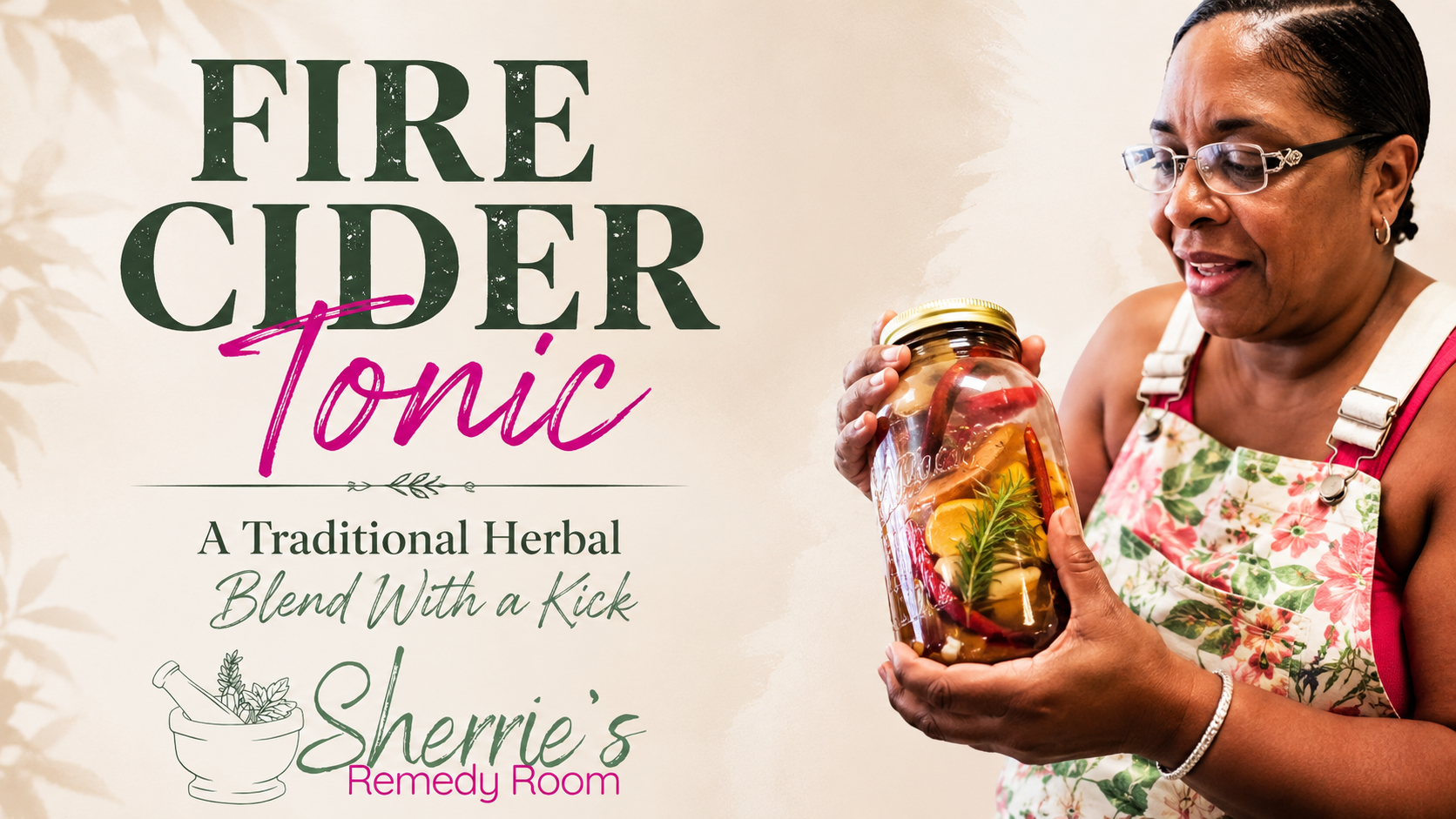
Fire Cider Tonic: A Bold, Traditional Herbal Blend With a Kick
If you’ve never tried Fire Cider before, the name gives you a pretty good idea of what to expect. It’s bold, warming, tangy, and has just enough kick to earn its name.
Fire Cider is a traditional herbal vinegar made by infusing apple cider vinegar with fresh roots, herbs, spices, citrus, and other flavorful ingredients. At Sherrie’s Remedy Room, Sherrie puts her own spin on this old-fashioned herbal tradition using ingredients you may already recognize from your kitchen.
The result is a deeply flavored tonic that can be enjoyed on its own, diluted in water, or added to foods as part of your everyday routine.
What Is Fire Cider?
Fire Cider is a traditional herbal vinegar made by steeping fresh roots, herbs, spices, and other flavorful ingredients in apple cider vinegar over time.
As the ingredients infuse, the vinegar takes on their bold flavors and aromas, creating a spicy, tangy, concentrated blend.
There isn’t one single Fire Cider recipe. Like many folk herbal preparations, recipes have been shared, adapted, and personalized over the years. Some versions are extra spicy, some lean heavily on citrus, and others include herbs such as rosemary, thyme, or warming spices.
That ability to make each batch your own is part of the tradition.
A Little Fire Cider History
ire Cider has become one of the best-known preparations in modern folk herbalism.
Herbalist Rosemary Gladstar is widely credited with popularizing the preparation and teaching it to students beginning in the late 1970s and early 1980s.
From there, the recipe spread throughout the herbal community, with home herbalists and makers adapting it to their own tastes and traditions.
That’s why you’ll see so many variations today. The basic idea remains the same: vinegar, bold fresh ingredients, time, and plenty of flavor.
What’s In Sherrie’s Fire Cider?
Sherrie’s Fire Cider Tonic brings together a flavorful mix of fresh roots, herbs, spices, citrus, and honey.
- Apple Cider Vinegar
- Turmeric
- Black Pepper
- Elderberry
- Oregano
- Cayenne Pepper
- Red Onion
- Garlic
- Ginger
- Lemon
- Orange
- Cinnamon
- Raw Honey
Each ingredient contributes its own flavor, aroma, heat, or sweetness, creating a tonic that is spicy, tangy, slightly sweet, and full of character.
How Sherrie Makes Her Fire Cider
Sometimes the easiest way to understand Fire Cider is to watch it being made.
Sherrie created the video below to walk you through her process, show you the ingredients that go into her Fire Cider, and give you a closer look at how everything comes together.
Make Your Own Fire Cider
One of the best things about Fire Cider is that there really isn’t just one recipe. It’s a folk herbal preparation that has traditionally been adapted based on personal taste, available ingredients, and just how much “fire” you want in your batch.
A classic Fire Cider base usually includes apple cider vinegar, horseradish, ginger, garlic, onion, hot peppers, and honey. From there, you can make it your own.
Basic Fire Cider Recipe
You’ll need:
- Fresh horseradish, chopped or grated
- Fresh ginger, chopped or grated
- Garlic cloves, peeled and chopped
- Onion, chopped
- Fresh hot pepper such as jalapeño or habanero, sliced
- Raw, unfiltered apple cider vinegar
- Raw honey, to taste
How To Make Fire Cider
1. Prepare Your Ingredients
Wash and prepare your fresh ingredients. Chop, slice, or grate the roots, onion, garlic, peppers, citrus, and any other ingredients you’re using.
Place everything into a clean glass jar.
You want the ingredients to have plenty of room for the vinegar to move around them, so avoid packing the jar too tightly.
2. Cover With Apple Cider Vinegar
Pour raw, unfiltered apple cider vinegar over the ingredients until they are completely submerged.
Make sure everything stays below the vinegar while it infuses.
Tip: Because vinegar is acidic, avoid allowing it to sit directly against a metal lid. Use a non-reactive lid or place a layer of parchment paper between the jar and a metal lid.
3. Let It Infuse
Seal the jar and place it in a cool, dark location.
Allow the mixture to infuse for approximately 3 to 6 weeks.
Gently shake the jar regularly during the infusion period to help keep the ingredients moving and coated with vinegar.
As the weeks pass, you’ll notice the vinegar becoming darker, more aromatic, and much more flavorful.
4. Strain
When the Fire Cider has reached the flavor and strength you like, strain the mixture through a fine-mesh strainer or cheesecloth.
Press the ingredients gently to extract as much of the infused vinegar as possible.
Discard or compost the strained solids.
5. Add Honey
Once strained, stir in raw honey to taste.
Start with a small amount and add more until you find the balance you like between the vinegar, heat, and sweetness.
Pour your finished Fire Cider into a clean glass bottle or jar and seal tightly.
Make It Your Own
That’s really the beauty of Fire Cider.
Want more heat? Add another pepper.
Love ginger? Use a little extra.
Prefer more citrus? Add lemon or orange.
Want something warmer and spicier? Cinnamon, turmeric, or black pepper can completely change the personality of the finished blend.
There’s no single “perfect” batch. Part of the Fire Cider tradition is experimenting until you find the combination that tastes right to you.
How Do You Enjoy Fire Cider?
There’s no single way to enjoy Fire Cider.
Sherrie typically enjoys about 1 teaspoon at a time (up to 3 times per day), but the bold vinegar-and-spice flavor can also be diluted or incorporated into food.
You can try it:
- Diluted in water
- Stirred into a warm drink
- Added to salad dressings
- Mixed into marinades
- Splashed over cooked greens
- Stirred into soups or stews
Because Fire Cider is naturally acidic, spicy, and concentrated, start with a small amount and find the way you enjoy it best.
That preserves what Sherrie actually does without turning it into a dosage recommendation.
What Does Fire Cider Taste Like?
Fire Cider definitely isn’t a sweet syrup.
Sherrie’s blend is tangy, spicy, warming, citrusy, and slightly sweet, with plenty of personality.
You’ll notice the sharpness of the apple cider vinegar first, followed by layers of ginger, cayenne, black pepper, garlic, and onion. Lemon and orange brighten the blend, while cinnamon and raw honey help round out the stronger flavors.
If this is your first time trying Fire Cider, expect something bold. That’s part of the experience.
Why the Name “Fire Cider” Has a Story
Fire Cider has an interesting place in modern herbal history.
After the name was registered as a trademark by a commercial company, members of the herbal community challenged the idea that one business should have exclusive rights to a term that herbalists had already been using for years.
The disagreement eventually made its way to federal court.
In 2019, a judge ruled that “fire cider” was a generic term rather than a name that could belong exclusively to one company.
For many herbalists, the case represented something bigger than the name of a vinegar tonic. It highlighted the long tradition of herbal knowledge being shared, taught, adapted, and passed from one person to another.
Making Fire Cider Part of Your Routine
One of the things Sherrie loves about traditional herbal preparations is that many of the ingredients are already familiar — ginger, garlic, citrus, cinnamon, honey, and apple cider vinegar are things people have used in their kitchens for generations.
Whether you enjoy a small amount on its own or incorporate it into your cooking, Fire Cider can be another flavorful way to bring traditional herbal preparations into your everyday routine.
The important thing is finding the way that works best for you.
Want to Try Sherrie’s Fire Cider Tonic?
Don’t feel like making a batch yourself? Sherrie has already done the work for you.
Sherrie’s Fire Cider Tonic combines apple cider vinegar, fresh roots, citrus, herbs, spices, elderberry, and raw honey into one bold, ready-to-enjoy blend.
If you love traditional herbal preparations — or you’ve simply been curious about Fire Cider — this is an easy way to experience Sherrie’s version.
Disclaimer: This information is provided for educational purposes only and is not intended to diagnose, treat, cure, or prevent any disease. These statements have not been evaluated by the Food and Drug Administration. Consult a qualified healthcare professional before using herbal products, especially if you are pregnant or nursing, take medications, have allergies, or have a medical condition.